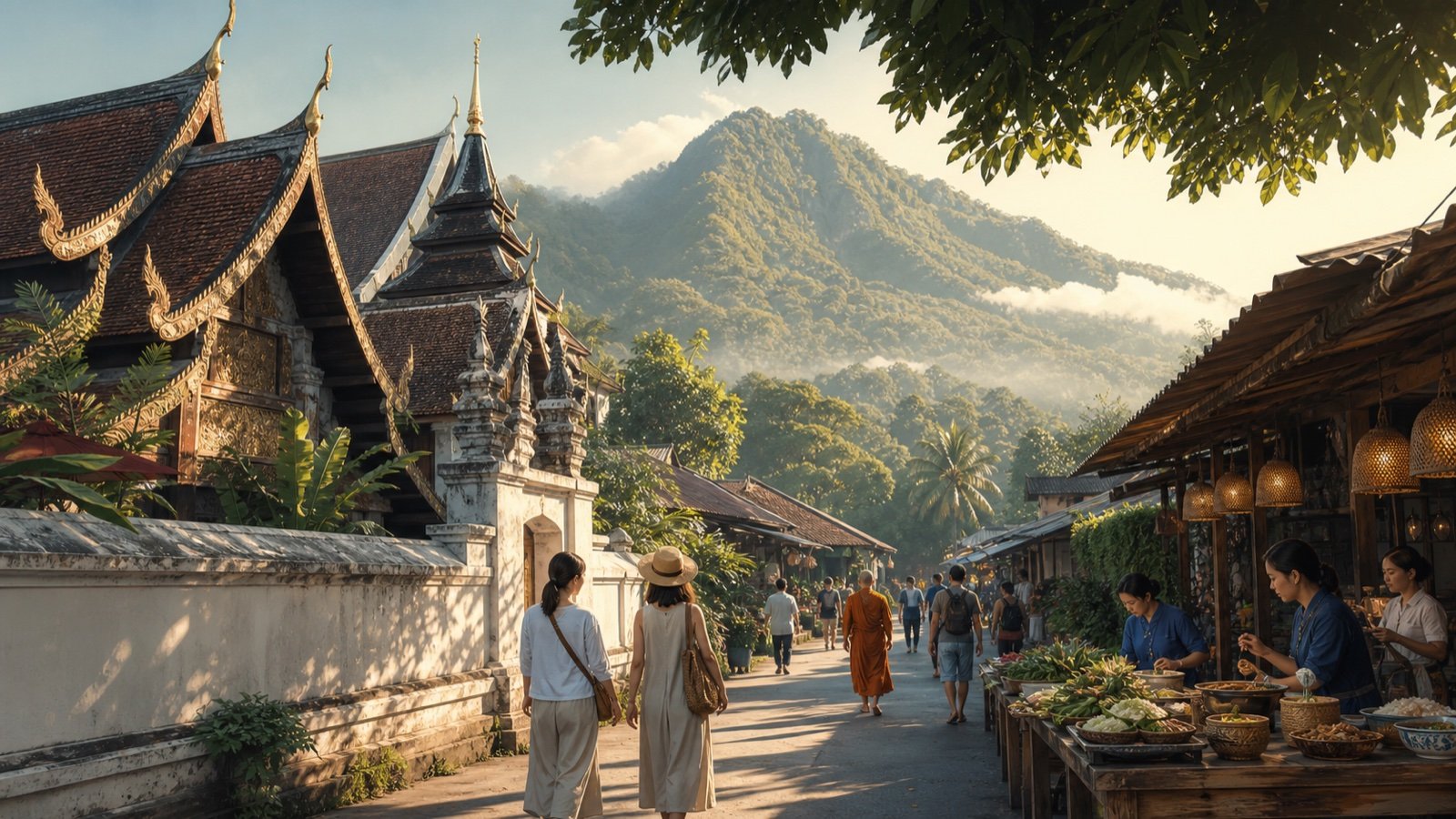
Chiang Mai rewards visitors who divide the trip between the historic city, contemporary neighborhoods and the surrounding mountains. The center is easier to understand than Bangkok, but major nature outings still require travel time and weather planning.
Where to stay
The Old City places temples, cafés and parts of the moat within easy reach. The Night Bazaar and riverside areas suit evening markets and hotel choice. Nimman offers contemporary dining, design and nightlife, while quieter outer districts trade walkability for space.
Temples and conduct
Chiang Mai’s temples are active religious places. Dress conservatively, remove shoes where instructed, keep voices low and avoid treating monks or worshippers as photo props. Visit early for cooler conditions and a calmer atmosphere.
Markets and food
Walking streets and markets vary by day, so verify the live schedule. Explore northern dishes as well as familiar central Thai food, and choose busy stalls with good turnover. Carry cash for small vendors while keeping valuables secure in crowded lanes.
Mountain days
Doi Suthep is close enough for a half-day, while Doi Inthanon and more distant areas require a longer commitment. Mountain temperatures can be much cooler than the city. Use responsible operators, avoid attractions built around harmful animal handling and do not enter protected areas outside permitted routes.
Seasonal planning
Heat, heavy rain and air quality can materially change a Chiang Mai itinerary. Check forecasts and official air-quality information close to travel, especially before strenuous outdoor activity. Build alternatives such as museums, craft spaces and cafés into the plan.
A sensible three-day shape
- Old City temples and a neighborhood food evening.
- A mountain or nature day chosen for current conditions.
- Markets, contemporary Chiang Mai and a slower cultural activity.