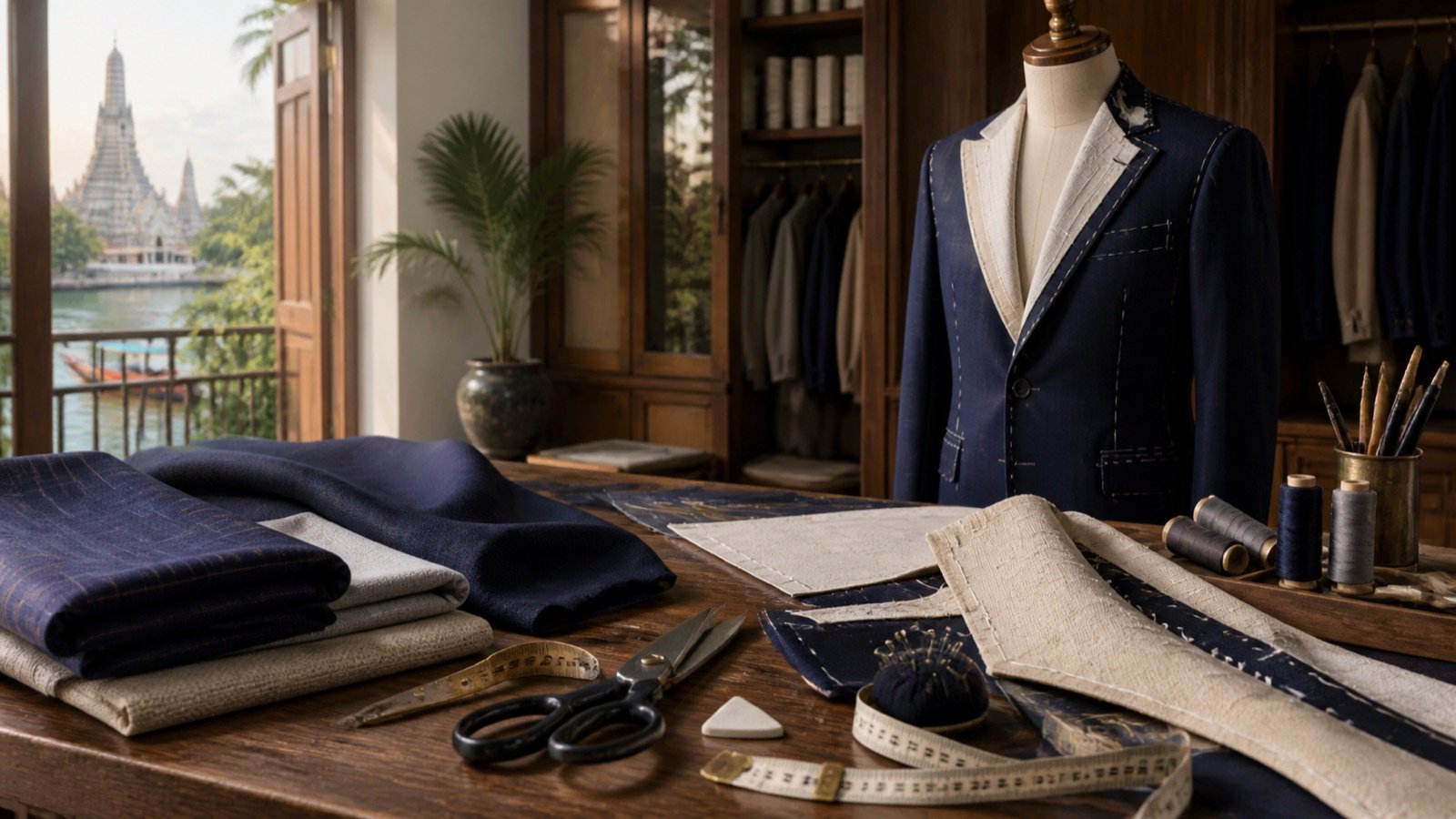
A disappointing tailoring experience is not always fraud, and an expensive garment is not automatically well made. Visitors can reduce risk by slowing the purchase, documenting the specification and evaluating the process at each fitting.
Walk away from pressure
Be cautious when a stranger redirects you from an attraction, a driver insists on one shop, or a “today only” offer prevents comparison. A reputable commission should survive a night of thought.
Verify what is being sold
Ask the business name, physical address, cloth identification, construction, fitting schedule, completion date, alteration policy and total price. Unsupported celebrity claims and ambiguous use of “bespoke” are not substitutes for process.
What to inspect at a fitting
- Collar contact without a large gap or roll.
- Shoulders that sit cleanly without restricting movement.
- Jacket balance and appropriate front/back length.
- Sleeve pitch and length.
- Trouser waist, seat, rise and break.
- Symmetry, comfort and the intended silhouette.
A fitting garment may be unfinished; judge whether the tailor identifies issues and explains the correction rather than dismissing them.
Payment and records
Use a traceable method when practical and keep the invoice, messages and specification. Understand deposit and refund terms before work begins. Do not surrender your passport as security.
If there is a problem
Describe the issue specifically, allow a reasonable correction opportunity and record what was agreed. If the matter involves alleged fraud or coercion, preserve evidence and contact the relevant payment provider or Thai authorities.
Commercial disclosure
GuideInThailand has a commercial relationship with Class Bespoke. The publication does not use that relationship to declare competitors fraudulent or to guarantee outcomes. Readers should apply the same evidence-based checks to every business.